
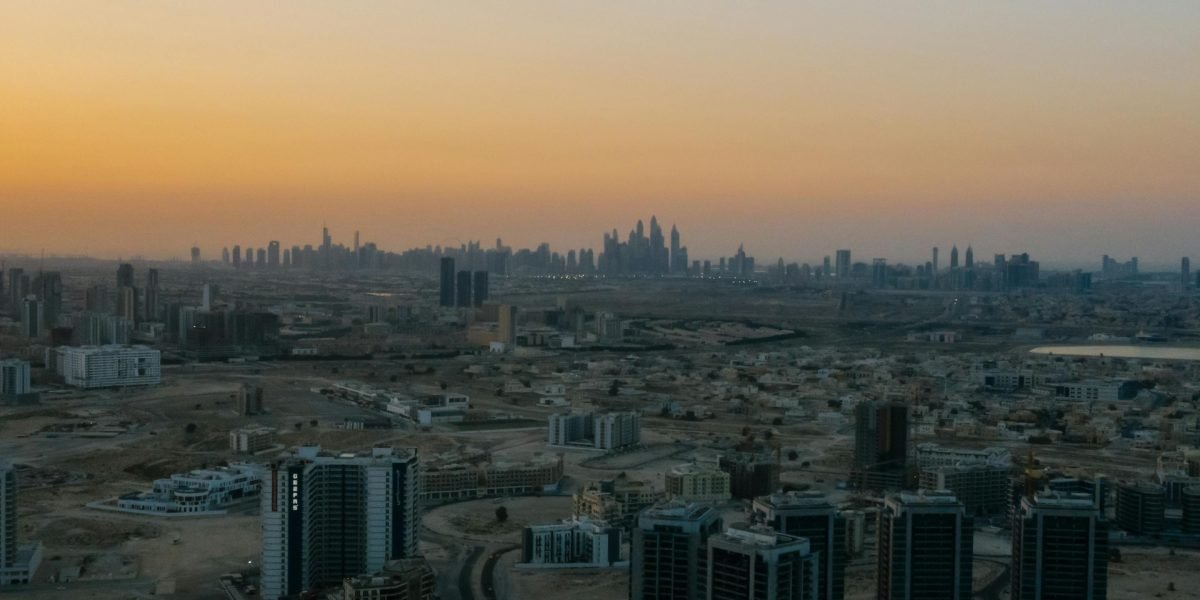
Quick market snapshot, the trust problem, and what this guide delivers
Dubai’s real estate market keeps growing. In 2026, more people than ever are looking at dubai real estate. Some want to buy a home. Others want to rent. Many want to build long-term wealth through dubai real estate investing.
Why? The city offers strong rental returns, no property tax, and a safe place to live. Buyers come from all over the world. They see dubai real estate as a smart move. And they are right.
But here is the thing. The market also comes with risks.
Finding a good agent is hard. There are hundreds of agencies. Some are great. Some are not. Scams happen. Hidden fees pop up. Rules change quickly. For someone new to real estate dubai, it can feel like walking into a maze without a map.
That is the trust problem.
You might have a list of questions. Is this agent licensed? Is the price fair? Am I getting the right advice? These worries are normal. But they should not stop you from making a good decision.
This guide is here to help.
We give you a practical, trust-first overview of real estate in Dubai for 2026. You will learn how to verify agents. You will understand the buying process step by step. You will know what questions to ask before you sign anything.
Our goal is simple. Help you move forward with confidence.
Whether you are buying a villa in Emirates Hills or looking at creative ways to buy real estate without money in Dubai, we have you covered. You can also check our complete guide to buying property safely in Dubai for more detail.
If you want personal help from someone who knows the market, reach out for a free chat. Get your free Dubai real estate consultation here
Let us walk through the market together.
2026 Market Snapshot: Prices, demand drivers and what to watch
So what does the actual market look like right now? Let me share the numbers that matter.
As of early 2026, the average property price in Dubai sits at roughly AED 1,850 per square foot, according to property price forecasts from Sands of Wealth. That works out to around AED 20,000 per square meter. Prices have been climbing steadily. By December 2025, the Residential Market Sales Price Index had risen by a massive 31.59% year on year, as reported by Global Property Guide. Apartment prices alone jumped 34.77% annually.
But here is the thing. Not all properties are moving at the same pace. Villas are currently the strongest performers, with appreciation rates between 13% and 15% annually. Apartments are still growing, but the gap is widening.
Who is buying right now?
Two main groups are driving demand.
End-users want a home. They are families looking at communities like Emirates Hills or villas in suburban areas. They care about schools, commute times, and community feel. Investors, on the other hand, chase rental yields. And Dubai delivers. The average gross rental yield in Dubai in 2026 sits between 5.5% and 7%, depending on the area and property type, as highlighted by Luxhabitat’s community yield analysis. Smaller units like studios and one-bedroom apartments tend to offer higher yields than larger villas.
What is pushing prices up?
Three big drivers are behind the momentum.
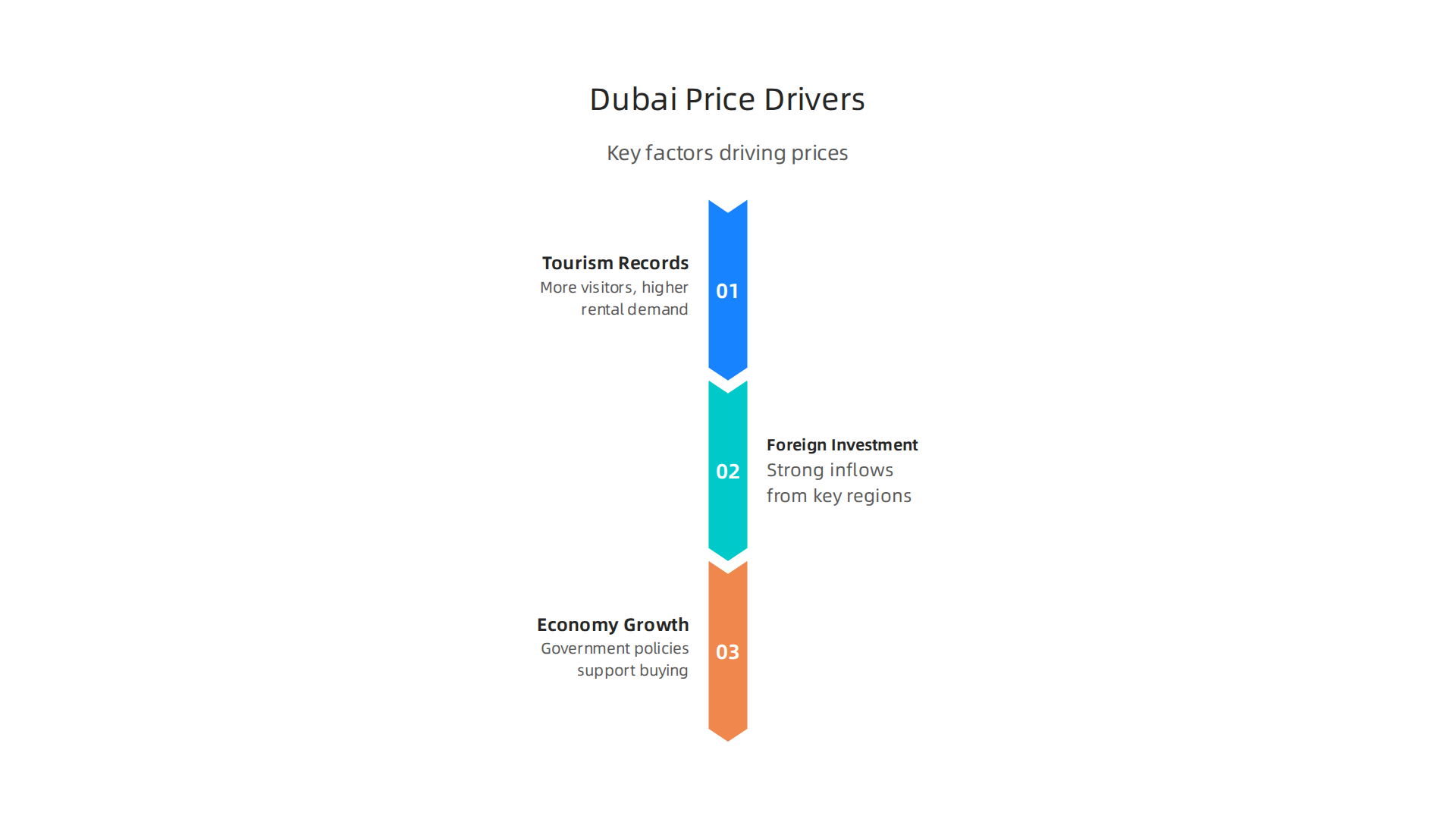
Tourism keeps breaking records. More visitors mean more short-term rental demand and more people falling in love with the city. Foreign investment stays strong, especially from buyers in Asia, Europe, and the Middle East. And the broader economy continues to grow, supported by government policies that make it easy to buy and own property.
The ValuStrat market outlook for 2026 points to strong economic growth and demographic trends that will keep shaping the market, as outlined in their Dubai Market Outlook report.
What to watch in the next 6 to 12 months
Here are the signals that matter.
First, supply is increasing. More off-plan projects are launching. That could moderate price growth in some areas. Second, Cushman & Wakefield expects market conditions to stay tight, with additional price and rental growth of 8% to 12% through 2026, as noted by Global Property Guide. Third, rental yields may compress slightly in premium areas as prices rise faster than rents.
For buyers, this means act with clarity but not panic. For investors, focus on areas where rental demand is strongest. If you want to explore your options further, check out our guide on how to vet real estate investment companies in Dubai for 2026 to make sure you partner with a trustworthy firm.
The bottom line
The Dubai real estate market in 2026 is strong but not simple. Prices are up. Demand is real. But the best opportunities require local knowledge and solid guidance. That is exactly what we help you find.
Want to talk through your specific situation with someone who knows the market inside out? Get your free Dubai real estate consultation here No pressure. Just honest advice.
Where to look: Neighborhoods, property types, and buyer profiles
Okay, so you know the big picture. Prices are up, demand is strong, and yields look good. But where exactly should you put your money? That depends on what you want.
Let’s break it down by three common buyer profiles. Pick the one that sounds like you.
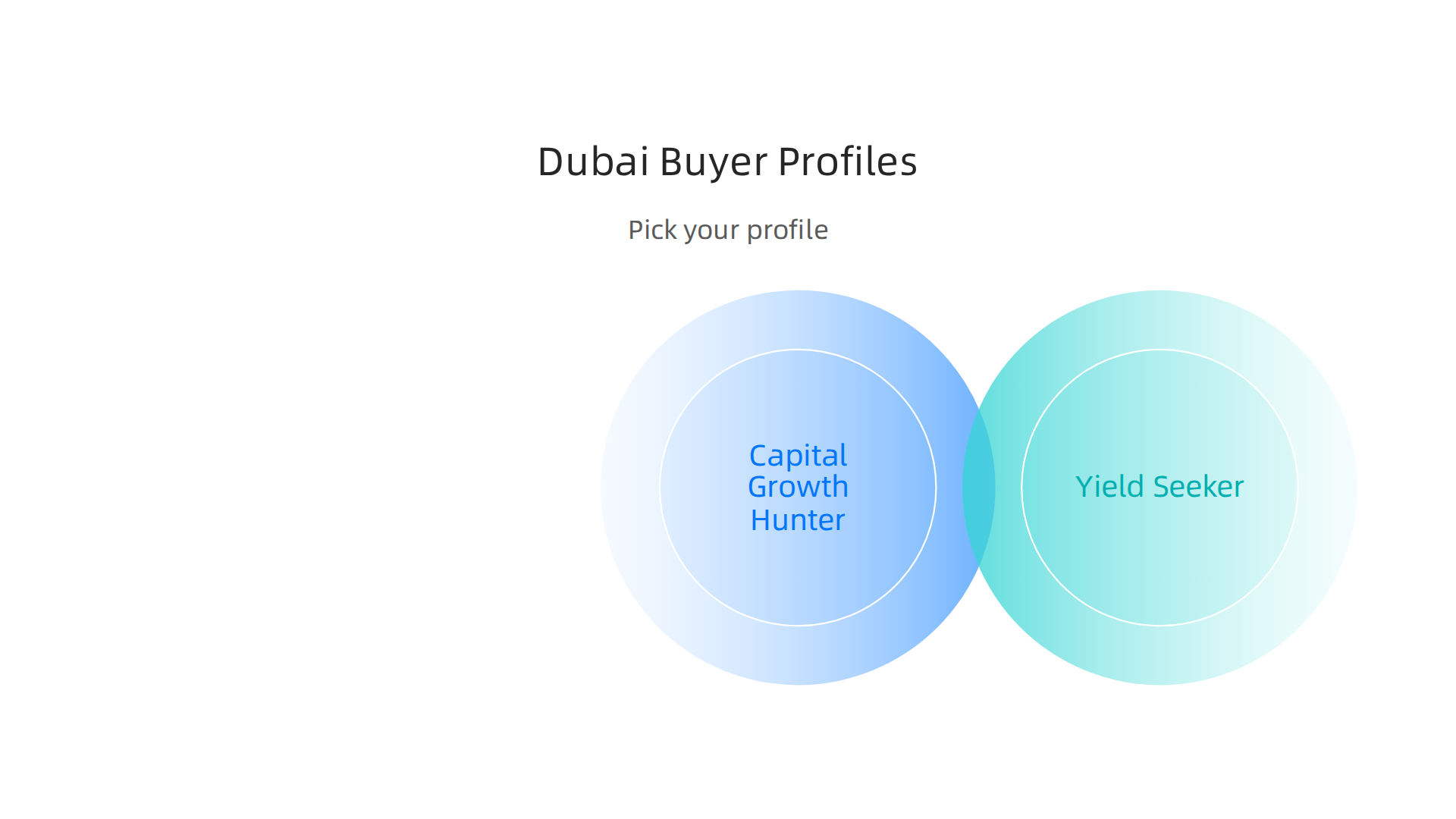

1. The capital growth hunter
You want your property to go up in value over time. You are okay with waiting a few years. Villas are your best friend. According to property price forecasts, villas in Dubai appreciate at around 13% to 15% annually. Communities like Emirates Hills, Palm Jumeirah, and Arabian Ranches tend to lead the pack.
If you are looking for a luxury villa, check out our guide on houses for sale in Emirates Hills to see what is available in 2026.
2. The yield seeker
You care about monthly income from rent. You want the highest rental return on your investment. Smaller units give you better yields. Studios and one-bedroom apartments in areas like Dubai Marina, JLT, and Deira often deliver gross rental yields of 7% or more. The Engel & Völkers report on the Dubai housing market confirms that these areas have strong tenant demand.
If you want to dive deeper into the numbers, check out the best places to invest in rental property in Dubai for 2026. That guide breaks down yields by community.
3. The lifestyle buyer
You are buying a home for yourself or your family. You care about community feel, schools, parks, and commute times. Suburban communities like DAMAC Hills, Al Barari, and Jumeirah Village Circle (JVC) are popular. They offer a good balance of space and affordability. Off-plan options here can also work well if you want to customize your home.
Trade-offs to think about
Here are some practical trade-offs that matter:
- New developments vs resale. New off-plan properties often have lower entry prices and payment plans. Resale properties let you see exactly what you get. Plus, you can rent them out right away.
- Waterfront vs inland. Waterfront communities like Dubai Marina or Palm Jumeirah usually have higher prices but strong demand. Inland areas like JVC or Business Bay give you more space for the same money.
- Serviced vs freehold. Serviced apartments come with management and higher service charges. Freehold properties give you full ownership and lower costs but you handle everything yourself.
The key is matching the property to your personal goal. That is what smart real estate investing in Dubai is all about.
Your next step
Still not sure which neighborhood fits you best? That is totally normal. The market has a lot of options. The best way to choose is to talk with someone who knows the ins and outs.
Get your free Dubai real estate consultation here No pressure. Just honest advice tailored to your situation.
Legal and regulatory essentials every buyer, seller and tenant must know
You have picked your neighborhood and decided on your property type. Now comes the part that trips up a lot of people. The legal side of things.
Here is the good news. Dubai has one of the most transparent and buyer-friendly property markets in the world. The government has strict rules to protect everyone involved. But you still need to understand the basic steps, fees, and paperwork. Otherwise, you could hit surprise costs or delays.
Let me walk you through what actually matters.
The main regulatory body you need to know
The Dubai Land Department (DLD) oversees all property transactions. They set the rules, registries, and fees. You cannot buy, sell, or rent without going through them. The DLD has a detailed set of rules and regulations that dictate everything from service charges to transaction procedures.
Another important name is RERA, the Real Estate Regulatory Authority. They license all agents and developers. Always verify that your agent has a valid RERA card. Our guide on how to vet real estate investment companies in Dubai for 2026 walks you through exactly what to check before signing anything.
Mandatory documents you must have
Whether you are buying or renting, you will need these key documents according to real estate transaction guides:
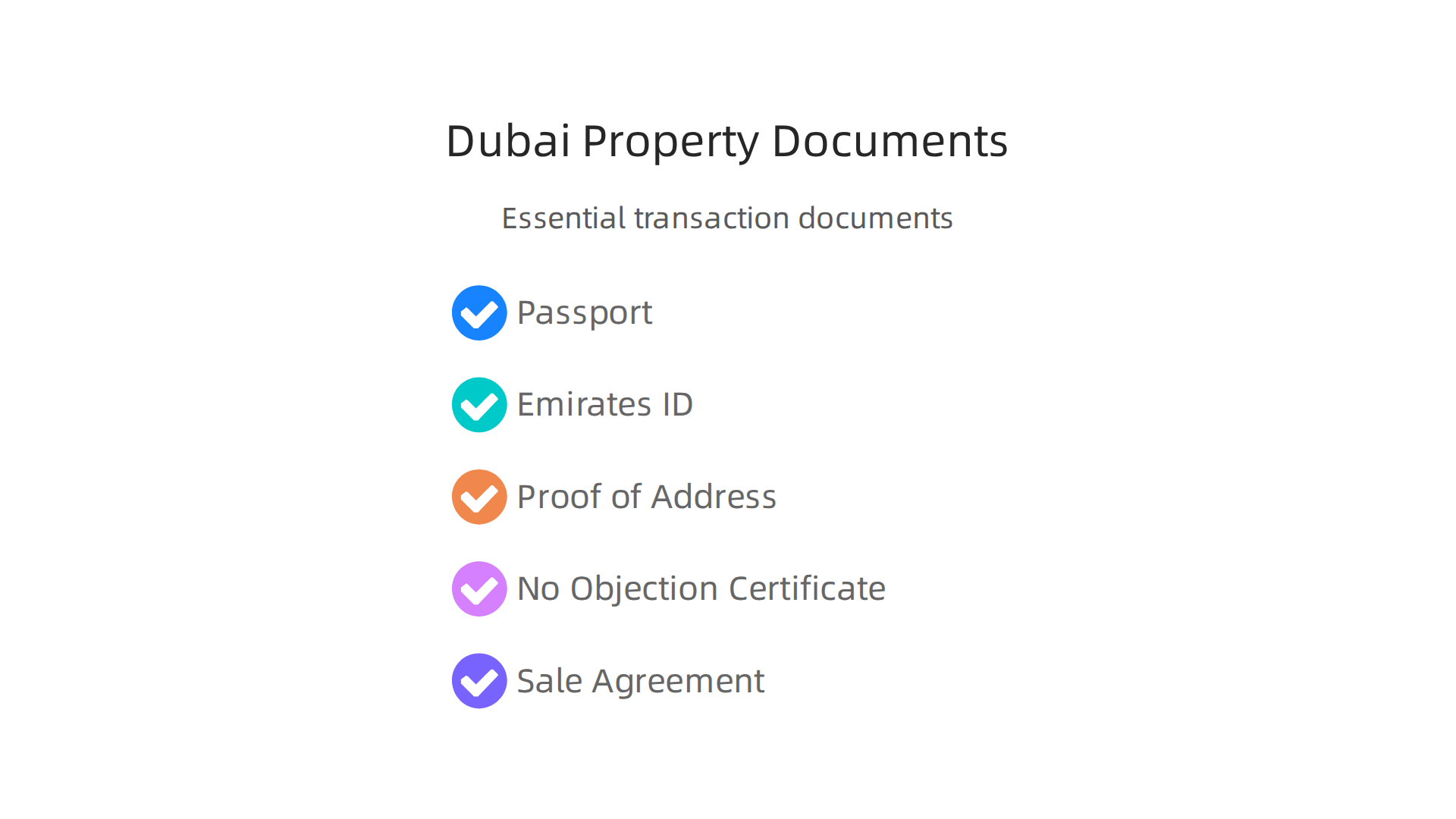
- Passport (valid copy)
- Emirates ID (if you are a resident)
- Proof of address like a utility bill or bank statement
- No Objection Certificate (NOC) from the developer if you are buying a resale property
- Sale agreement or tenancy contract signed by both parties
The process starts with preparing a buyer/seller contract, then moving to the formal sale agreement, applying for the NOC, and finally registering with the DLD. Missing any of these steps can kill the deal.
The fees and taxes you will pay
Here is the part that surprises most first-time buyers. Dubai has no annual property tax. But there are upfront costs.
The biggest one is the DLD transfer fee. It is 4% of the property value. That is mandatory. You also have to pay admin costs around AED 430 for land registration and AED 40 per title deed.
For a complete breakdown of every expense you will face when purchasing residential real estate in Dubai in 2026, check the detailed fee guide.
How this affects foreigners vs residents
Here is a common pitfall. Foreigners can buy property in designated freehold areas without any restrictions. You do not need to be a resident. But the paperwork is heavier. You need proof of funds, bank statements, and clear documentation of where your money comes from.
Residents have it easier. Your Emirates ID speeds up the process. But you still need to understand the NOC process from your developer especially when buying from the secondary market.
The key difference? Non-residents often face more scrutiny on the source of funds. Residents face more scrutiny on service charges and maintenance fees.
One practical tip. Always work with a RERA licensed agent. They handle all the paperwork and make sure you do not miss deadlines. If you want to avoid mistakes, our step-by-step buying guide dives into every detail.
The biggest mistake people make
Skipping the NOC from the developer. If you buy a resale property without it, the DLD will not register the transfer. You could lose your deposit. Always ask for the NOC before you pay anything beyond the booking fee.
Real estate in Dubai is safe and transparent. But only if you follow the process correctly.
If reading all this feels a bit overwhelming, that is normal. The rules are clear but there are many steps. The easiest way to get it right the first time is to talk with someone who does this every day.
Click here for your free consultation with Ayaz Salman No pressure. Just clear answers tailored to your situation.
How to vet and choose a trustworthy real estate agent in Dubai
You have learned the legal basics. Now comes the next big question. How do you pick someone you can trust to handle your Dubai real estate deal?
The truth is, not every agent is the same. Some are excellent. Some are just okay. And a few are people you should avoid entirely. Here is a simple checklist you can use to find the right one.
Step 1: Check their license first
Every legal real estate agent in Dubai must hold a valid RERA card.

This is not optional. You can ask to see it, or you can check the RERA database online. If they cannot show you a card or give you a broker license number, walk away.
To become a certified agent in Dubai, a person must complete training through the Dubai Real Estate Institute (DREI) and pass mandatory exams. Agents who have taken the time to earn their credentials through this step-by-step licensing process are more likely to follow the rules.
Step 2: Look at their track record
A good agent has a history you can check. Ask them:
- How many deals did they close in the last year?
- Do they specialize in the area you are interested in?
- Can they share recent client references?
If they hesitate or get defensive, that is a red flag. A trustworthy agent is proud of their work and happy to show proof.
Step 3: Ask about fees upfront
Agent commissions in Dubai are not fixed, but there are standard ranges. A clear agent will explain their fees before you sign anything. If the fees seem unusually low or high, ask why. If they avoid the topic, consider that a warning.
For more detail on what agents typically charge and how to negotiate, check our guide on standard RERA commission rates.
Step 4: Watch for these red flags
Some signs that an agent may not be reliable include:
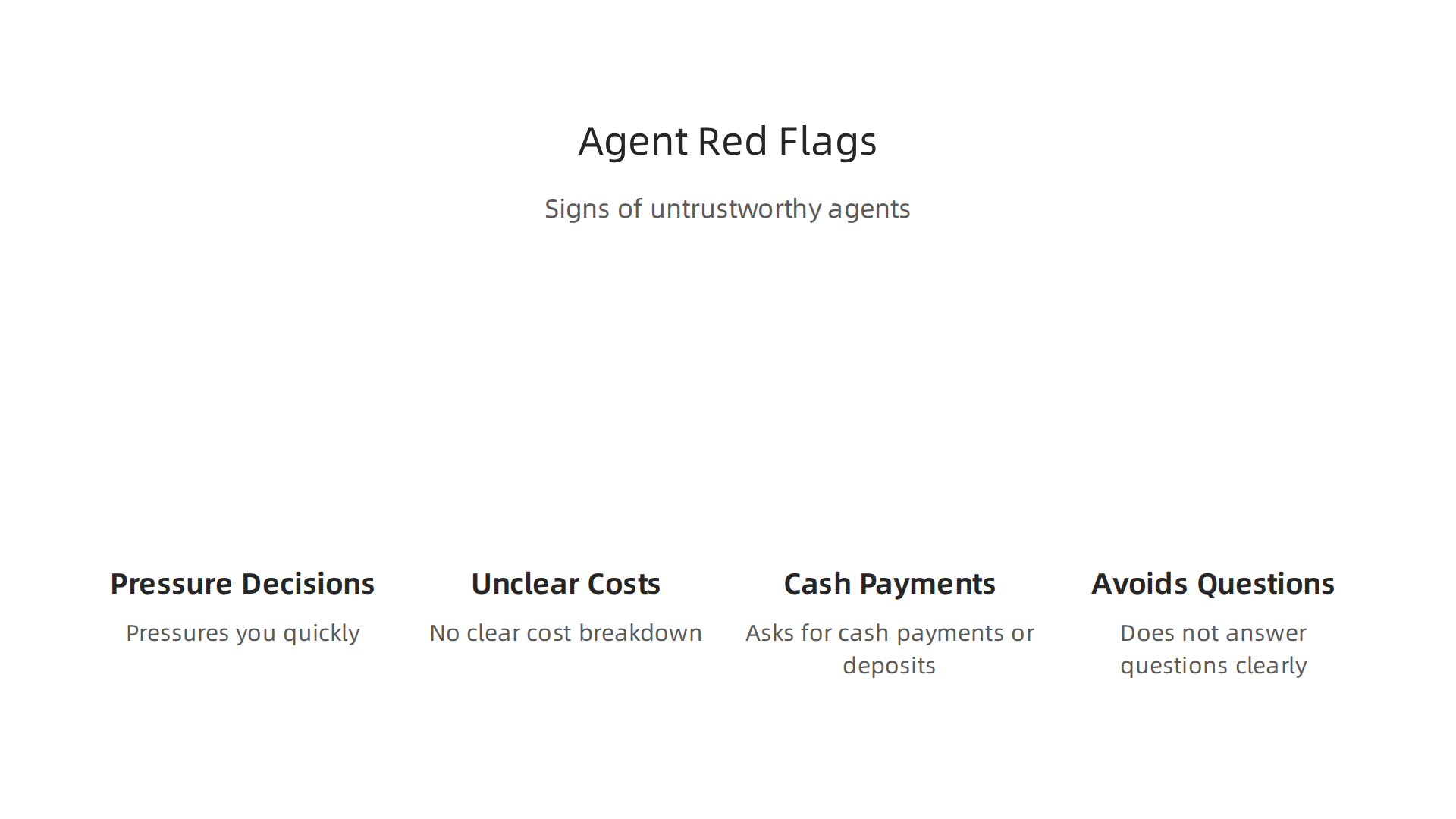
- They pressure you to make a quick decision
- They cannot give you a clear breakdown of all costs
- They ask for cash payments or deposits before you see the property
- They do not answer your questions clearly
Scams in Dubai real estate are rare, but they do happen. Taking the time to verify your agent is one of the best ways to avoid them.
Use this simple scoring system
Here is a practical way to compare agents. Give each one a score out of 10 based on these five questions:
| Question | Score (0-2) |
|---|---|
| Verified RERA license | __/2 |
| At least 2 years of experience in your area | __/2 |
| Transparent about fees and commissions | __/2 |
| Provided at least 2 client references | __/2 |
| Did not pressure you or avoid questions | __/2 |
| Total | __/10 |
Any agent scoring below 6 is risky. Aim for someone who hits 8 or higher.
If you want to go deeper into how to find a great agent near you, our guide on finding a trustworthy brokerage in Dubai covers the full process.
Finding the right match for your needs
Every buyer and investor has different priorities. The agent who is perfect for a luxury villa buyer in Emirates Hills might not be the right fit for someone looking for a studio in JLT. Ask yourself what matters most to you. Speed? Price? Local knowledge? Then choose an agent who matches those needs.
And remember, a good agent does more than just show properties. They guide you through the legal steps, help you avoid mistakes, and protect your money.
If you want personalized advice on finding the right agent or starting your property search, reach out for a free talk.
Click here for your free consultation with Ayaz Salman No cost, no pressure. Just honest guidance on your next step.
Investment strategies, returns and risk management for 2026
You have found a good agent. Now comes the real question. What kind of investor do you want to be in Dubai real estate? The answer depends on your goals, your timeline, and how much risk you can handle.
Let us look at the three main strategies that work in 2026.
Strategy 1: Buy-to-let for monthly income
This is the simplest approach. You buy a property and rent it out. Your goal is steady cash flow every month.
In 2026, the average gross rental yield in Dubai sits between 5.5% and 7%, depending on the area and property type, according to LuxHabitat. Smaller units like studios often give better returns than larger villas.
This strategy works best in communities with strong tenant demand. Areas like JLT, Dubai Marina, and Deira tend to perform well for buy-to-let investors.
If you want to see which specific neighborhoods offer the best rental returns, check this detailed breakdown of best places to invest in rental property in Dubai.
Strategy 2: Short-term rentals for higher upside
Some investors prefer holiday homes or Airbnb-style rentals. These can earn more per night than long-term leases. But they also demand more work. You need to handle bookings, cleaning, and guest communication.
This strategy works best in tourist-heavy areas like Downtown Dubai, Palm Jumeirah, and Dubai Marina. You also need to follow Dubai’s holiday home regulations carefully.
Strategy 3: Capital appreciation for long-term growth
Here you buy a property expecting its value to rise over time. In 2026, villas are showing strong appreciation. Some estimates suggest annual growth of 13% to 15%, as reported by Sands of Wealth.
This approach works well if you can hold the property for several years. It is less about monthly income and more about building wealth.
The Engel & Völkers Dubai housing market overview for 2026 confirms that overall conditions remain positive, with continued price growth expected.
Risk factors you must consider
No market goes up forever. Here are the main risks for dubai real estate investing in 2026:
- Market cycles: After strong growth, some analysts expect a slowdown. Cushman & Wakefield predicts additional price and rental growth of 8% to 12% in 2026, but that could ease if supply increases, according to Global Property Guide.
- Oversupply: New projects launch all the time. If too many units hit the market, rental yields and prices could soften.
- Regulation changes: Laws around visas, rental caps, or property taxes can shift. Stay informed.
How to stress-test your investment thesis
Before you put money down, ask yourself a few hard questions:
- What if rental yields drop by 2%?
- What if property prices stay flat for two years?
- Can you still cover the mortgage and service charges if the property sits empty for three months?
Running these scenarios helps you avoid bad surprises. For a full walkthrough of how to build a solid plan, read our guide on Dubai real estate investment strategies for 2026.
If you want honest advice on which strategy fits your situation best, reach out for a free talk.
Click here for your free consultation with Ayaz Salman No cost. No pressure. Just real guidance on your next step in real estate a Dubai.
Practical buying, renting and leasing checklist: step-by-step actions
You now know which strategy fits you best. But knowing is not enough. You need a clear set of steps to move from idea to keys in hand. Here is a practical checklist for buyers, tenants, and landlords in 2026.
For buyers
-
Get your documents ready
You will need a valid passport, Emirates ID, and proof of address, like a utility bill or bank statement. These are mandatory for any dubai real estate transaction, according to BHomes. -
Understand the costs
The Dubai Land Department charges a 4% fee on the property value. Add admin costs of around AED 430, plus agent fees. A full breakdown of property taxes, fees, and costs in Dubai can help you budget. -
Sign the sale agreement
The legal process involves a Sales Purchase Agreement, a No Objection Certificate, and registration with the DLD. The guide from Red Eye Real Estate outlines each step clearly. -
Transfer ownership
This happens at the DLD office. Both parties must be present or have power of attorney.
For tenants
-
Verify the listing
Rental scams are common in 2026. Always visit the property in person or via a live video call before paying anything, as advised by Lodgerin. -
Check the Ejari system
All rental contracts must be registered with Ejari. This protects your rights as a tenant. -
Pay the deposit and agency fee
Typically 5% of the annual rent as a security deposit and 5% as agent commission. Use secure payment methods.
For landlords
-
Prepare the property
Make sure all maintenance is done and furniture is in good shape if it is furnished. -
Set a fair rent
Check RERA’s rental index to price your unit competitively. -
Draft a strong tenancy contract
Include clear terms on maintenance, notice periods, and deposit return.
Timeline example
A typical real estate a dubai transaction takes 30 to 60 days from offer to handover.

Negotiations last about 1 week, deposits are paid within 3 days, and the final transfer at DLD takes a few hours. Planning ahead saves you stress.
If you want a smooth process from start to finish, get help from someone who has done it many times.
Click here for your free consultation with Ayaz Salman No cost. No pressure. Just clear guidance for your next step in dubai real estate investing.
Summary
This guide gives a trust-first, practical overview of Dubai real estate in 2026, explaining why buyers and investors are still attracted to the market and what risks to watch. It summarizes current prices and growth—average AED 1,850/sq ft with villas leading appreciation—and identifies the main buyer types (end-users, yield seekers, lifestyle buyers). The article walks you through legal essentials (DLD, RERA, required documents, and the critical NOC), typical fees like the 4% DLD transfer tax, and the timeline for transactions. It shows how to vet agents and brokerages with a simple scoring system, compares strategies (buy-to-let, short-term rentals, capital appreciation), and offers a practical checklist for buyers, tenants and landlords. Throughout it emphasizes avoiding red flags, matching property choice to your goals, and using local expertise to reduce risk. The guide closes with invites for a free consultation to get personalised help and move forward with confidence.