

Introduction
The UAE real estate market is booming in 2026. And that is not an exaggeration.
In the first quarter of this year alone, Dubai recorded over 47,000 property sales worth AED 176.7 billion. According to a report from the Dubai Land Department, the UAE property market surged in Q1 with Dubai and Abu Dhabi leading, recording total transactions of Dh252 billion, up 31% year on year.
What is driving all this growth? Three big factors attract global investors: high rental yields, zero property taxes, and steady price appreciation. The market is moving from short-term flipping to long-term value investing. That shift creates stable opportunities for those who understand the landscape.
But here is the problem. If you are new to real estate investment in Dubai, the market can feel confusing. You might not know who to trust. You might worry about hidden fees or legal traps. You might lack the local knowledge to make a confident move. These challenges stop many good investors before they even start.

That is exactly why this guide exists.
We wrote this to help you cut through the noise. You will learn actionable strategies for investing safely. You will understand the legal steps required. And you will get a clear framework for finding a trustworthy real estate agent. Before you spend a single dirham, read this guide to buying property safely in Dubai to understand the process from start to finish.
Whether you want to learn how to buy real estate with no money or explore high-end real estate Dubai investment options, this guide covers it all. Every tip is tailored to the 2026 market so you can invest with confidence.
Ready to take the next step? Get a FREE Dubai Real Estate Consultation and connect with an expert who can guide you through the process.
Why the UAE Remains a Top Global Real Estate Investment Hub in 2026
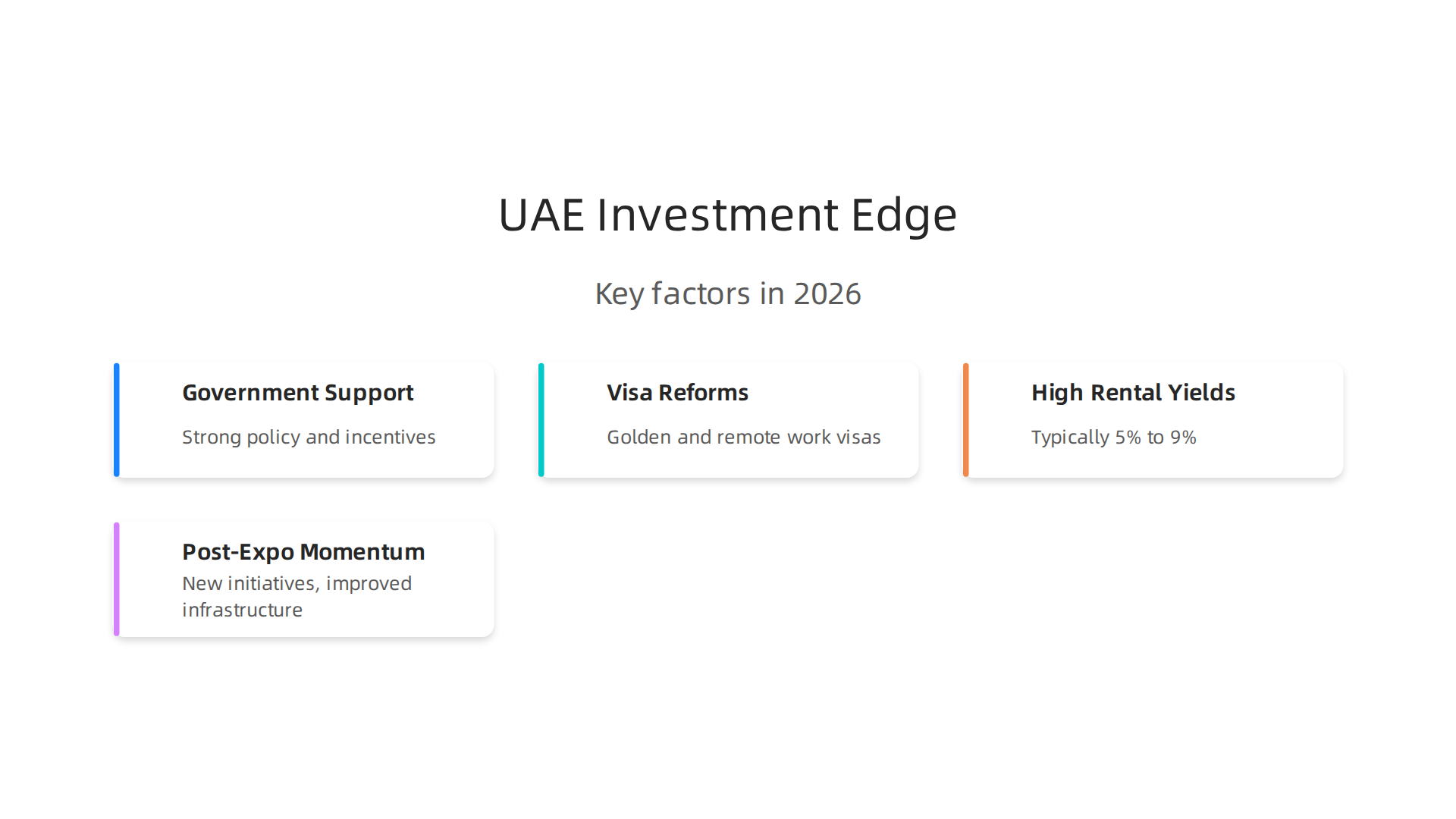
The numbers we covered in the introduction tell a compelling story. But what exactly is driving this momentum? Three major factors set the UAE apart from other global markets.
Post-Expo 2020 momentum continues to shape the market. The legacy of Expo 2020 lives on through new economic initiatives and world-class infrastructure. The UAE government has invested heavily in roads, public transport, and community developments. These projects make cities like Dubai and Abu Dhabi more attractive for both residents and businesses. The demand for housing keeps climbing as more people move here for work and lifestyle opportunities.
Visa reforms have opened the doors for foreign investors. The UAE introduced the Golden Visa, which allows investors to obtain long-term residency. There is also a remote work visa for digital nomads. These policy changes mean you can buy property in Dubai and secure a stable future for your family without worrying about visa renewals every few years. Foreign buyers now feel more confident investing in the market.
Rental yields are among the best in the world. In 2026, rental yields in Dubai typically range from 5% to 9%. Compare that to major Western cities like London, New York, or Toronto, where yields often sit below 4%. For buy-to-let investors, that difference adds up fast. You earn more passive income while your property appreciates in value.
The UAE real estate market is also shifting from short-term flipping to long-term value investing. This change benefits serious investors who want stable growth rather than quick profits. According to a market analysis, the Dubai housing market shows sustained growth with over 200,000 residential transactions recorded in 2025 and continued demand in 2026.
If you are considering a real estate Dubai investment, now is the time to understand how these factors work together. The combination of strong government support, investor-friendly visa policies, and high rental returns makes the UAE a top choice for global investors in 2026.
For a deeper look at how to evaluate your options, read our guide on how to choose the right real estate and investment company in Dubai 2026.
Essential Legal & Regulatory Framework Every Investor Must Know
Now that you understand why the UAE is a strong market, let’s look at the rules that protect your money. The UAE has a clear legal system for foreign buyers. If you follow it, you can invest safely and avoid costly mistakes.

Freehold vs. leasehold ownership
Foreign buyers can own property outright in designated freehold areas. These include popular spots like Dubai Marina, Downtown Dubai, Palm Jumeirah, and Dubai Hills Estate. According to the guide on top freehold areas in Dubai, foreign nationals can buy, sell, lease, or pass these properties to their heirs with no time limits.
Outside freehold zones, only UAE and GCC nationals can own land. Other buyers can get leasehold ownership, which means you own the building but not the land for a set period (usually 99 years). Always check if a property is in a freehold area before you sign anything.
RERA keeps everything honest
The Real Estate Regulatory Authority (RERA) is the government body that oversees all real estate in Dubai. Every real estate agent, broker, and developer must have a valid RERA license. You can check if someone is licensed on the Dubai Land Department website. Only work with licensed professionals. If an agent cannot give you their RERA number, walk away.
Escrow accounts protect your off-plan payments
When you buy a property that is still under construction, your money must go into a registered escrow account. This account is managed by a bank and supervised by RERA. It ensures your funds are used only for that specific project. If the developer faces problems, your money stays safe. Always verify that the escrow account is registered with RERA before making any payment.
This system is one reason the UAE real estate market has earned trust from global investors. To learn more about protecting yourself when buying off-plan, read our guide on how to invest safely in off-plan properties in Dubai.
If you are ready to buy, sell, or invest in Dubai, getting expert help makes the process smoother. Connect with Ayaz Salman for a free consultation and get personalized advice for your situation.
Proven Real Estate Investment Strategies for Maximum Returns
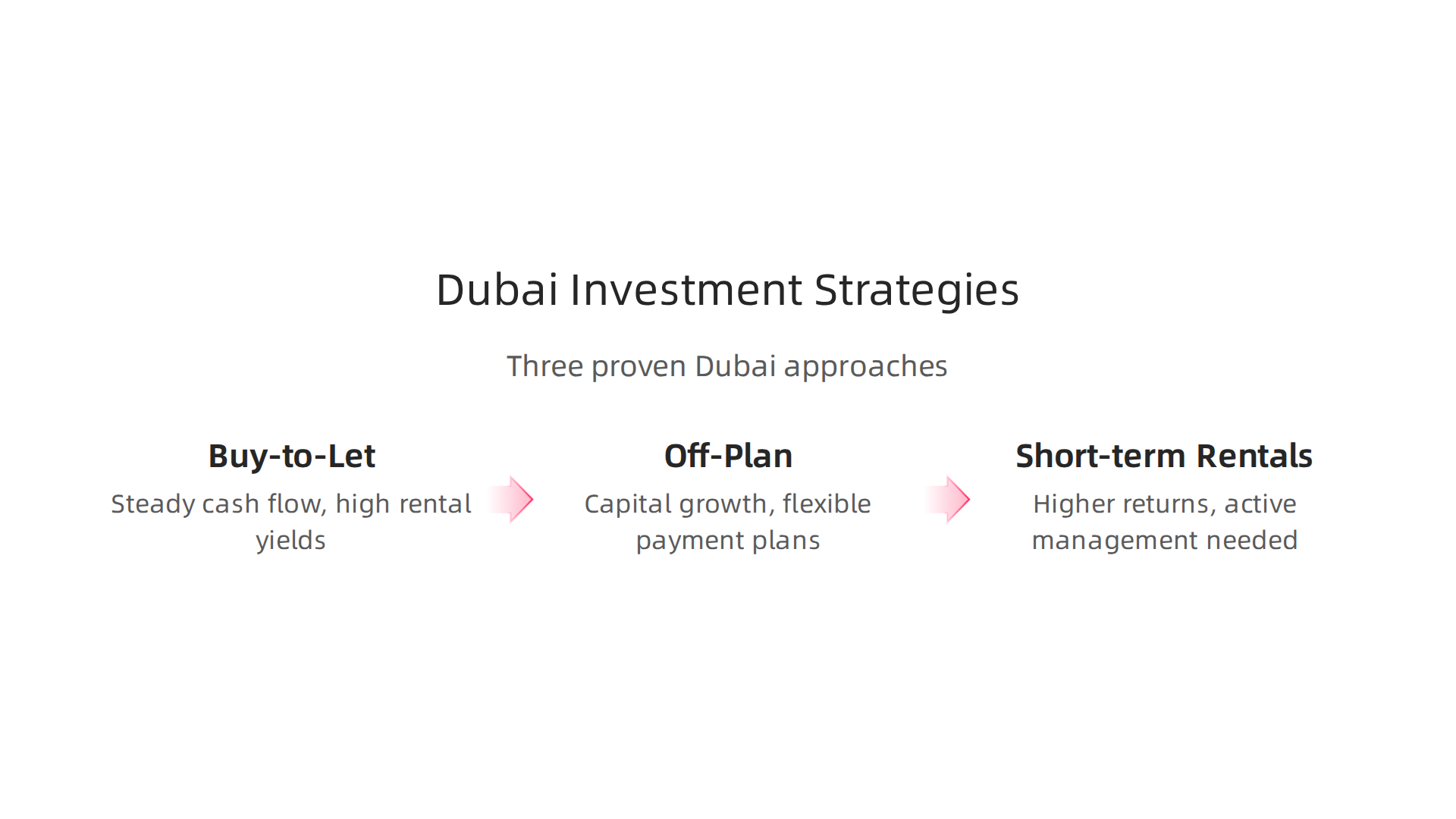
Now that you understand the legal setup, it is time to talk strategy. The best way to make money in the Dubai market is to pick an approach that matches your goals. Let’s look at three proven methods that work well in 2026.
Strategy 1: Buy-to-let for steady cash flow
This is the classic approach. You buy a property and rent it out to someone else. Dubai offers some of the best rental yields in the world, often between 5% and 9% in popular communities like Jumeirah Village Circle, Dubai Marina, and Business Bay. That is much higher than what you would see in cities like London or New York.
The key is to choose the right unit size. Well-sized one-bedroom and two-bedroom apartments are usually the easiest to rent out. They appeal to young professionals and small families who make up a large part of Dubai’s workforce. A detailed analysis of the 2026 Dubai real estate ROI shows that ready properties give you immediate rental income, which makes them great for investors who want predictable returns each month.
If you want to learn how to find a trustworthy agent to help you buy your rental property, our guide on how to choose the right real estate and investment company in Dubai can point you in the right direction.
Strategy 2: Off-plan investments for capital growth
Off-plan means you buy a property that is still under construction. The price is usually lower than a completed unit, and developers often offer flexible payment plans. You might pay only a small percentage during construction and the rest when the property is finished.
The big payoff comes from capital appreciation. Once the building is done, the value of your unit can jump significantly. Some investors see gains of 10% to 15% each year during the construction phase. The tradeoff is that you do not earn any rental income until after handover. This makes off-plan a smart choice if you have a longer time horizon and want to build wealth over several years.
Just remember to always check the developer’s track record. A comparison of off-plan vs ready properties in Dubai confirms that the strongest returns come from projects delivered by reputable developers on time.
For a deeper look at reducing risk when buying off-plan, check out our guide on how to evaluate property development companies in Dubai.
Strategy 3: Short-term rentals for higher returns
Short-term rentals, like Airbnb-style stays, can earn you more money per night than a standard lease. This works best in tourist-heavy spots such as Dubai Marina, Palm Jumeirah, and Downtown Dubai.
But there is a catch. This strategy requires active management. You need to handle guest communication, cleaning, check-ins, and maintenance. You also need to follow Dubai’s Tourism Directive regulations. Some investors hire a property management company to handle these tasks, which cuts into your profit but saves you time.
If you are new to the UAE real estate market, short-term rentals can feel overwhelming at first. The payoff can be worth it, but you need to be ready for the extra work.
Which strategy fits you best?
There is no single correct answer. Your choice depends on your goals.

Want steady income every month? Go with buy-to-let. Want to grow your money over a few years with a smaller upfront cost? Off-plan might be better. Want the potential for higher cash flow and do not mind managing a property? Short-term rentals could be your path.
The good news is that you do not have to figure this out alone. Whether you are buying, selling, or investing, getting expert help makes a big difference. Connect with Ayaz Salman for a free consultation and get personalized advice for your situation.
How to Identify and Verify a Trustworthy Real Estate Agent
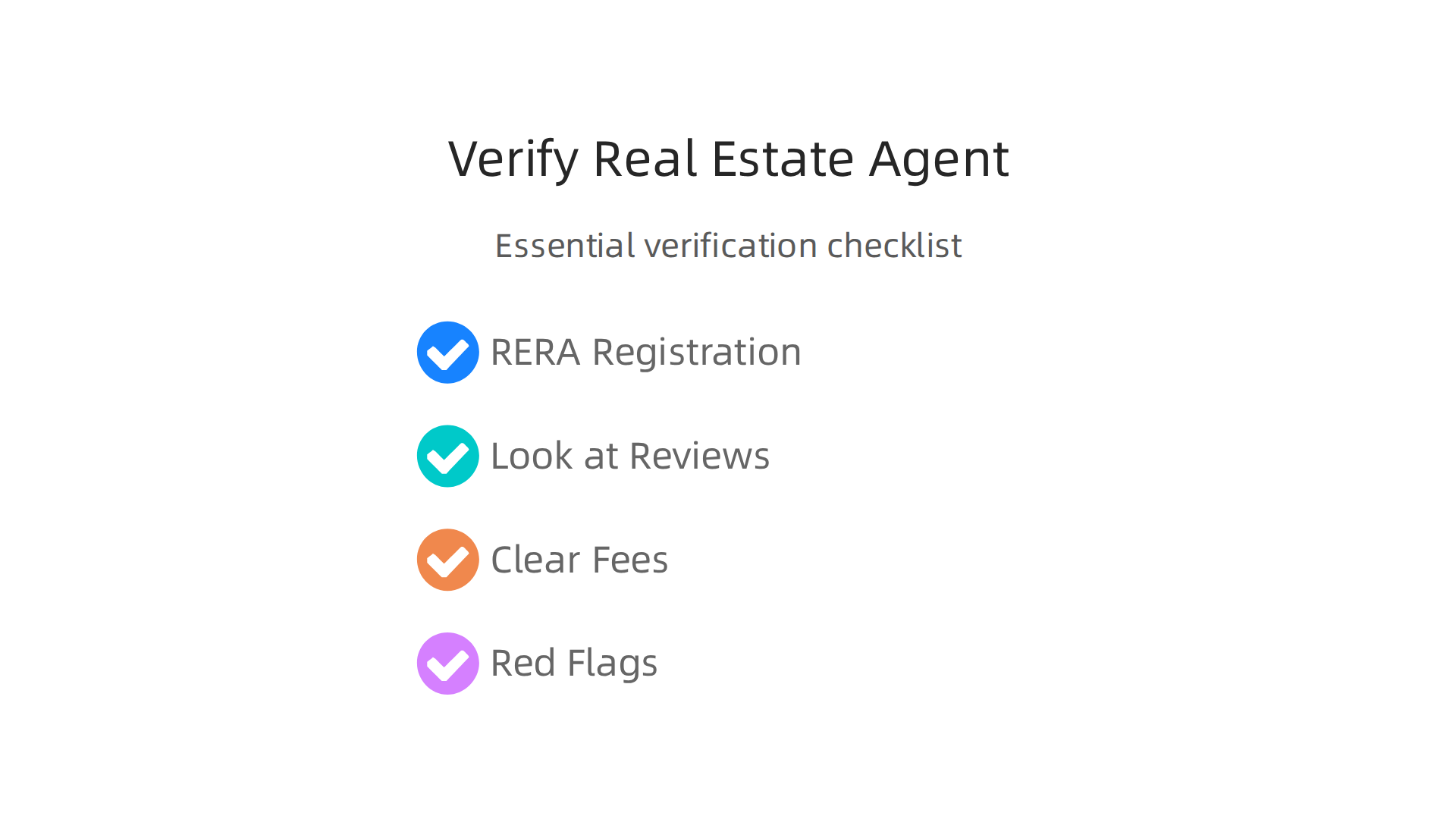
Picking the right agent is just as important as picking the right property. A bad agent can cost you time, money, and a lot of stress. A good agent makes the whole process smooth and safe. So how do you tell the difference? Here are the most important steps to take before you sign anything.
Step 1: Check Their RERA Registration
Every real estate agent in Dubai must have a valid license issued by the Real Estate Regulatory Authority (RERA). This is not optional. If an agent cannot show you their RERA registration number, that is a major red flag.
You can verify any agent’s license in seconds. Go to the Dubai Land Department website or download the Dubai REST app. Enter the agent’s name or their agency name, and the system will show you their license details. This official service for checking licensed real estate brokers is free and easy to use.
An agent who is properly registered will have no problem giving you their number. If they hesitate or make excuses, walk away.
Step 2: Look at Reviews and Past Sales
A licensed agent is a good start, but you also want someone who knows their stuff. Search online for reviews from past clients. Look for agents who have experience in the specific area you are interested in. If you want to buy in Dubai Marina, find an agent who has sold several properties there.
Also ask about their recent transactions. A trustworthy agent will be happy to share examples of properties they have helped buy or sell. If they only talk about future deals and never mention past ones, that is a sign to be careful.
Step 3: Demand Clear Fee Information
Good agents explain their fees upfront. In Dubai, standard commission is usually 2% of the purchase price plus VAT. Some agents charge a flat fee for rental properties. Whatever the rate, it should be clearly stated in writing before you start working together.
If an agent is vague about costs or tries to add hidden fees later, find someone else. Transparency is a sign of professionalism.
Step 4: Watch for Red Flags
Some agents will promise you amazing returns that sound too good to be true. They might say a property will double in value in one year or that you can get a guaranteed 15% rental yield. In the real world, those numbers are almost impossible to guarantee. Be very skeptical of agents who pressure you to make a fast decision.
A good agent gives you realistic expectations. They explain both the upsides and the risks. If an agent is pushing you to sign immediately or asking for large deposits without proper paperwork, those are serious warnings.
How to Learn More
If you want a deeper look at what to ask and what to watch for, check out this guide on how to find a trustworthy real estate brokerage near me. It covers specific questions you can ask before hiring anyone.
Taking a few extra minutes to verify an agent can save you from months of regret. The Dubai real estate investment market is full of great opportunities, but only if you work with someone you can trust.
Step-by-Step Guide to Completing a Property Transaction in Dubai
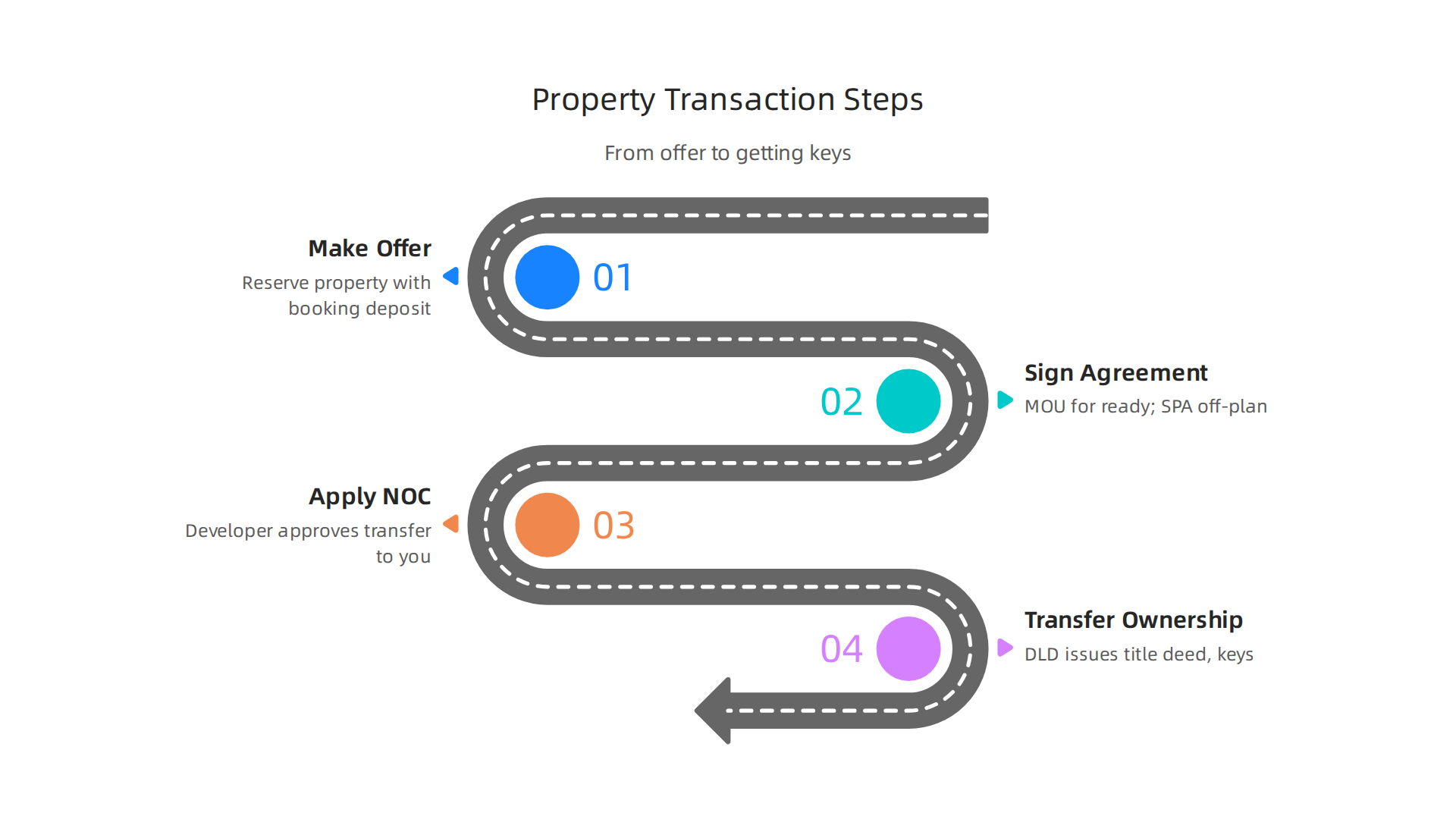
Now that you know how to pick a trustworthy agent, let’s walk through the actual buying process. Dubai has a clear legal system for property deals. If you follow each stage carefully, you will avoid costly mistakes. Here is what happens from the moment you make an offer to the day you get your keys.
Stage 1: Make an Offer and Reserve the Property
You find the right home and your agent submits a formal offer to the seller. If the seller agrees, you pay a booking deposit. This is usually 5% to 10% of the purchase price. The property is then taken off the market while you move forward. Always get a signed receipt and make sure the deposit goes into a registered escrow account or the seller’s broker’s trust account.
Stage 2: Sign the Agreement
For a ready property, you sign a document called the Memorandum of Understanding, or MOU. This is also known as Form F. It lists the final price, payment schedule, and handover date. Both you and the seller sign it. At this point you also pay a security deposit of 10%, which is held until the transfer.
For off-plan properties, you sign a Sales and Purchase Agreement (SPA) instead. The SPA includes the payment plan, completion timeline, and delivery terms. You can read more about the differences in this detailed guide on buying property in Dubai 2026.
Stage 3: Apply for the No Objection Certificate (NOC)
The seller must get a No Objection Certificate from the developer. This document confirms that all service charges and fees are paid and the developer approves the transfer to you. The NOC fee ranges from AED 500 to about AED 5,000, depending on the developer. The process usually takes a few days.
Stage 4: Transfer Ownership at the Dubai Land Department
Now comes the official transfer. You and the seller go to a DLD Trustee Office or use the Dubai REST app. You pay the remaining balance of the purchase price. The DLD charges a transfer fee of 4% of the property value. You also pay a trustee office fee of around AED 4,000 and a title deed fee of AED 580. Once everything is verified, the title deed is issued in your name. The seller hands over the keys.

The full step-by-step process is explained in this 2026 guide from Driven Properties, which covers each stage with exact costs and documents needed.
What Are the Total Costs?
For any real estate investment in Dubai, you need to budget for extra fees beyond the property price. Here is a quick breakdown of the typical costs:
- DLD transfer fee: 4% of the property price
- Agent commission: 2% plus VAT
- Trustee office fee: AED 4,000 to AED 4,200
- Title deed fee: AED 580
- NOC fee: AED 500 to AED 5,000
- Mortgage registration fee (if financing): 0.25% of the loan amount
In total, expect to pay around 6% to 7% on top of the purchase price. Knowing this upfront makes the uae real estate market easier to navigate.
Important: Always Use Safe Payment Channels
Never pay cash to an individual. Always use escrow accounts, bank transfers, or official DLD payment channels. This protects your money and ensures the transaction is legal.
If you want personalized guidance for your specific situation, you can get a FREE Dubai Real Estate Consultation with Ayaz Salman. He can answer your questions about the process, costs, and next steps.
Summary
This article is a practical 2026 guide to investing in UAE real estate, explaining why the market remains strong and how to invest safely. It covers the main drivers—post‑Expo infrastructure, investor‑friendly visa changes, and attractive rental yields—and explains the legal framework you must follow, including freehold vs leasehold rules, RERA licensing, and escrow protections for off‑plan purchases. You will find three proven investment strategies (buy‑to‑let, off‑plan, and short‑term rentals), step‑by‑step instructions for completing a property transaction, and a clear breakdown of typical fees so you can budget properly. The guide also shows how to verify a trustworthy agent, spot red flags, and choose the right approach for your goals. After reading, you will know how to evaluate developers, protect your payments, and move through a Dubai purchase with confidence and fewer surprises.